
What Is Thalassaemia?
Thalassaemia is an inherited blood disorder which is caused by an abnormal gene. A person with Thalassaemia is unable to produce normal, functioning haemoglobin in the blood. Haemoglobin carries oxygen from the lungs to all parts of the body. When the body is not able to produce normal, functioning haemoglobin, the affected person suffers from anaemia. Thalassaemia is passed on from parent to child and can affect both males and females. In India, about 3.5% of the population are carriers of the Thalassaemia gene.
What Are The Types Of Thalassaemia?
There are two types of thalassaemia:
1. Thalassaemia minor (Thalassaemia trait or Carrier).
2. Thalassaemia major.
A person who has inherited one Thalassaemia gene is said to have Thalassaemia minor (Thalassaemia trait or Carrier). He or she is healthy and leads a normal life. Most people with Thalassaemia minor do not know that they have it. However, the affected persons can pass on the abnormal gene to their children.
Thalassaemia major is a severe form of anemia. The affected person has inherited two Thalassaemia genes, one from each parent. He or she may look normal at birth but within 1 - 2 years of life, will suffer from severe anaemia, which leads to poor growth and development as well as a shorter lifespan.
The affected person will need blood transfusion every month to sustain life.
Any permanent cure / treatment of Thalassaemia major?
At present, a bone marrow transplant is the only hope of possible cure for thalassaemia major but the risks are considerable. Permanent and best treatment for such children is Bone Marrow Transplantation ( B.M.T. ) with a matched brother / sister. The odds of finding a compatible donor are around 30 per cent and most donors are siblings. This operation is more successful in young children who don't suffer from iron overload, but graft rejection or even death can still result. The risks involved mean that bone marrow transplantation is not a viable option for some families. It should be remembered that a person with thalassaemia major can live a normal life with regular transfusions and medication. Genetic research is ongoing in the hope of finding a cure.
Thalassaemia minor are absolutely normal & healthy like YOU and do not know that they are minors unless they have a special blood test HbA2/Hb Electrophoresis.
In India Bone Marrow Transplantation is available at Christian Medical College and Hospital , Vellore Tamil Nadu . The estimated cost of B.M.T at C.M.C H Vellore is around 12 lac. In addition to this cost, medicines and timely investigation before and after B.M.T costs another 2 – 3 lac making a total budget of Rs. 14 – 15 Lac . this condition is beyond the reach of most. [ Rs. 45 = around 1 dollar] Bone marrow transplants
How Is Thalassaemia Inherited?
If only one parent has thalassaemia minor, the following can occur:
- 50% chance of having a child with thalassaemia minor
- 50% chance of having a normal child
- None of the couple's children will get thalassaemia major.
If both parents have thalassaemia minor, the following can occur:
- 25% chance of having a child with thalassaemia major
- 50% chance of having a child with thalassaemia minor
- None of the couple's children will get thalassaemia major.
The chances are the same with each pregnancy, no matter how many children the couple may have.
Who Should Go For Thalassaemia Screening?
Since thalassaemia can be passed on from one generation to another, you and your partner should go for a thalassaemia screening if you are:
- Planning to get married
- Starting a family.
Thalassaemia screening involves a simple blood test and is available at all polyclinics.
What Should I Do If I Have Thalassaemia Minor?
If you or your partner has thalassaemia minor, both of you should see a doctor for genetic counselling before you plan to get married or have a child. The doctor will explain the risks and discuss the choices you have. He may refer you to the National Thalassaemia Registry for further counselling.
The Foundation Against Thalassaemia provides genetic counselling for people with thalassaemia and screening for their families. The members of Foundation Against Thalassaemia will be able to answer your questions about this blood disorder.
What If I Am Already Pregnant?
If you are already pregnant and both you and your husband have Thalassaemia minor, you should go for a prenatal diagnostic test to find out whether your unborn baby has Thalassaemia major.
Prenatal diagnosis can be done by chorionic villus sampling or by fetal blood sampling. Both tests are conducted under ultrasound guidance.
Chorionic villus sampling involves obtaining some cells from the placenta for testing. This is done before 9-10 weeks of pregnancy.
Fetal blood sampling involves obtaining a small amount of fetal blood from the umbilical cord for testing. This procedure is done at about 18 - 20 weeks of pregnancy. Based on the result of the test, the doctor will advise you and your husband accordingly.
थैलेसीमिया क्या है ?
थैलेसीमिया माइनर एक आनुवंशिक बीमारी है जिसमें हीमोग्लोबिन की मात्रा नॉर्मल से कुछ कम रहती है. इसको समझने के लिए हमें हीमोग्लोबिन की बनावट के विषय में कुछ बेसिक बातों को समझना होगा. जैसा कि हम सब जानते हैं हमारे रक्त में हीमोग्लोबिन नाम का एक पदार्थ होता है जोकि फेफड़ों से ऑक्सीजन लेकर उसको शरीर के विभिन्न भागों तक ले जाता है. हीमोग्लोबिन की रचना में एक हीम (haem) नाम का स्ट्रक्चर होता है और उसके साथ चार ग्लोबिन चेन (globin chains) होती हैं. वयस्क लोगों में नॉर्मल हीमोग्लोबिन में दो अल्फा और दो बीटा चेन होती हैं. इन के बनने की प्रक्रिया को अलग-अलग जींस (genes) कंट्रोल करते हैं. यदि बीटा चेन बनाने वाला जीन डिफेक्टिव है तो बीटा चेन कम बनती है और उसके फलस्वरूप हीमोग्लोबिन भी कम बनता है. इस कंडीशन को बीटा थैलेसीमिया कहते हैं. अल्फा चेन कम बनने की स्थिति को अल्फा थैलेसीमिया कहते हैं.
 हमारे शरीर की कोशिकाओं (cells) के केंद्र (nucleus) में कुल 46 क्रोमोसोम होते हैं जिनमें से 23 हमें माता से और 23 पिता से प्राप्त होते हैं. अर्थात क्रोमोसोम्स के 23 जोड़े होते हैं. शरीर की हर एक क्रिया को क्रोमोसोम्स का एक जोड़ा नियंत्रित करता है. जितनी भी आनुवंशिक बीमारियां हैं वह इन्हीं क्रोमोसोम्स में स्थित जींस में डिफेक्ट होने के कारण होती हैं. यदि जोड़े में से एक जीन डिफेक्टिव होता है तो बीमारी हल्की होती है या वह व्यक्ति केवल उस बीमारी का कैरियर होता है (अर्थात उस व्यक्ति में बीमारी के लक्षण नहीं आते). यदि दोनों जीन डिफेक्टिव होते हैं तो बीमारी अधिक खतरनाक रूप में होती है.
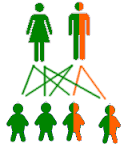
हम में से बहुत से लोग बीटा थैलेसीमिया के कैरियर होते हैं लेकिन उनको यह जानकारी नहीं होती. उनको केवल खून की थोड़ी सी कमी होती है जिससे कोई विशेष लक्षण उत्पन्न नहीं होता. लेकिन उनके लिए यह जानकारी होना बहुत आवश्यक है कि वे बीटा थैलेसीमिया के कैरियर हैं. मान लीजिए एक परिवार में पुरुष बीटा थैलेसीमिया का कैरियर है अर्थात उसके एक जीन में बीटा थैलेसीमिया डिफेक्ट है लेकिन उसकी पत्नी के दोनों जीन नॉर्मल हैं. ऐसे में उनकी संतान में मां से दो में से एक जो भी जीन जाएगा वह नॉर्मल होगा पर पिता से जाने वाला जीन नॉर्मल भी हो सकता है और डिफेक्टिव भी हो सकता है. यदि पिता से नार्मल जीन पहुंचेगा तो वह संतान नॉर्मल होगी. यदि पिता से डिफेक्टिव जीन पहुंचेगा तो वह संतान पिता की तरह कैरियर होगी. बहुत से लोगों को इस विषय में कुछ मालूम ही नहीं पड़ता और पीढ़ी-दर-पीढ़ी उनकी संताने कैरियर हो सकती हैं. अब इसमें खतरा यह है कि यदि माता-पिता दोनों कैरियर हों और उनकी संतान में दोनों से डिफेक्टिव जीन पहुंच जाए तो संतान में थैलेसीमिया मेजर नाम का खतरनाक रोग हो जाएगा जिसमें संतान की जान को खतरा होता है.
थैलासीमिया संवाहक [कॅरियर / माइनर ] का पता दो ही स्तिथियो में चल सकता है या तो कोई व्यक्ति थैलासिमिया संवाहक [कॅरियर / माइनर ] एचबीए 2 का टेस्ट अपनी मर्ज़ी से करवा ले, या फिर जब उनके यहां थैलासिमिया ग्रस्त बच्चा पैदा हो जा है। अब मर्ज़ी आपकी है, कोन सा रास्ता उचित रहेगा ?
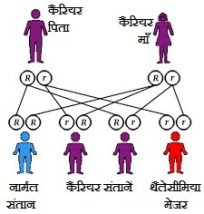 इस जानकारी का महत्व यह है कि यदि किसी एक व्यक्ति में बीटा थैलेसीमिया ट्रेट (trait) अर्थात उसके कैरियर होने का पता चलता है तो पूरा वंशवृक्ष (family tree) बनाकर उसके माता पिता दोनों ओर के लोगों की जांच कराकर यह देखना चाहिए कि उस परिवार में कौन-कौन लोग कैरियर हैं. जो लोग कैरियर हैं उनके लिए दो बातें जानना आवश्यक है – एक तो यह कि यदि उनका विवाह किसी दूसरे कैरियर से होता है तो संतान में थैलेसीमिया मेजर का खतरा होता है, दूसरा यह कि जो लोग कैरियर हैं उनको हमेशा खून की थोड़ी कमी रहती है. उनकी ब्लड पिक्चर इस प्रकार की होती है कि उसमें आयरन की कमी होने का धोखा होता है. जिन चिकित्सकों को इस विषय में पूरी जानकारी नहीं होती वह ऐसे मरीजों को आयरन कि अनावश्यक डोज़ देते रहते हैं. आयरन अधिक पहुंचने से भी ऐसे लोगों में नुकसान हो सकता है. इस प्रकार के मरीजों में रक्त में आयरन की जांच कराने के बाद ही आयरन देना चाहिए.